 kofit36
Brazil’s hip-hop scene has long been a voice for the marginalized, but in 2025, that voice faces renewed challenges. The ongoing criminalization of rap lyrics under claims of “incitement” or “offensive content” is testing the limits of artistic freedom and reigniting debates about race, class, and resistance in Brazilian music.
While not confined to August alone, this cultural tension continues to shape the nation’s broader musical landscape. From São Paulo’s underground cyphers to Rio’s mainstream stages, rappers are being forced to question how far they can go in speaking truth to power.
The Fire That Never Dies: From Racionais to the New Wave
Brazilian hip-hop has always been political. Since the early days of Racionais MC’s, whose lyrics documented police violence, racism, and social inequality, rap has served as an unfiltered mirror of the country’s struggles. In 2025, that legacy remains alive though often under fire.
Recent statements from cultural critics and legal watchdogs show that artists continue to face scrutiny, especially when their lyrics touch on issues like state brutality or racial profiling. For many, it feels like history repeating itself: the same system that once tried to silence Racionais MC’s now targets a new generation of rappers armed with beats, bars, and rebellion.
DJ K’s “Rádio Libertadora!”: A Sonic Protest
One of the year’s most powerful statements came from DJ K, whose August release Rádio Libertadora! transformed the turntables into a battlefield. Mixing baile-funk, techno, and hip-hop, DJ K crafted an ideological project that invokes Brazil’s long fight for freedom.
The album samples a 1969 radio broadcast by revolutionary Carlos Marighella, whose voice banned during the dictatorship echoes like a ghost through the modern mix. Critics and fans alike called it “an act of musical resistance,” a reminder that Brazil’s rhythm and rebellion are inseparable.
Rádio Libertadora! didn’t just drop music it dropped a message. It asked a simple but dangerous question: how free can you be in a country still afraid of its own voice?
Freedom of Expression: Who Gets to Speak?
While streaming platforms thrive with new Brazilian rap content playlists like “Latest Brazilian Rap Music 2025” updating weekly the artists behind those songs often face legal risks for simply expressing their lived realities.
Authorities in several states have reportedly investigated rappers whose lyrics describe poverty, drug wars, or political disillusionment. These investigations mirror global debates about rap’s role in activism and how governments interpret “artistic intent.”
In many ways, Brazil stands at a crossroads. The law still sees rap as potential provocation. The people see it as the last line of truth.
Hip-Hop as History, Hip-Hop as Weapon
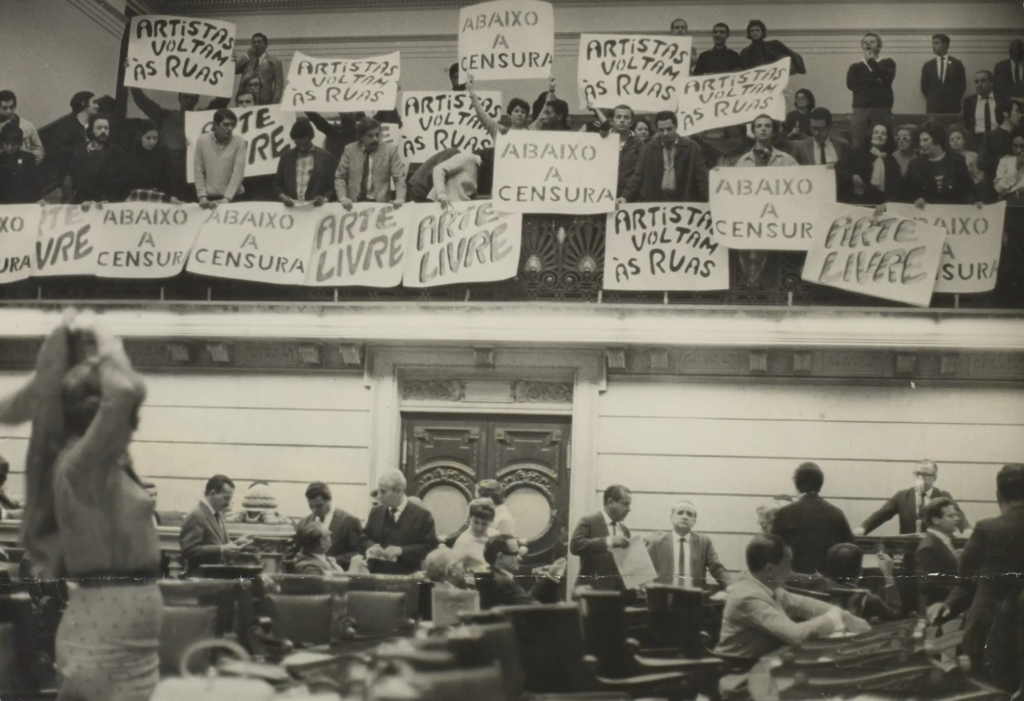
The criminalization of lyrics doesn’t just silence rappers — it erases history. Hip-hop in Brazil grew as a language of survival in favelas, an outlet for youth to document realities the media ignored. Each verse was a testimony, every beat a heartbeat of resilience.
When the state polices lyrics, it doesn’t just control art it controls narrative. And narrative is power.
That’s why collectives across Brazil are rallying under slogans like “Rap Não é Crime” (“Rap Isn’t a Crime”) and “Liberdade de Expressão Já” (“Freedom of Expression Now”). They’re using performances, graffiti art, and online campaigns to demand legal reforms that recognize hip-hop as protected speech.
Global Solidarity and the New Generation
Internationally, major artists like Kendrick Lamar and Lauryn Hill both set to perform in Brazil in 2025 have inspired local rappers to see their struggle as part of a global fight for representation. Younger Brazilian MCs are blending conscious rap with experimental sounds, proving that protest can evolve without losing its purpose.
Rappers like MC Jhowzera, who recently began new projects after viral fame, are channeling anger into introspection. Their verses reflect modern realities digital oppression, surveillance, and economic instability but still carry echoes of classic resistance anthems.
The Future Is Amplified
As censorship debates unfold, one thing is certain: Brazilian rap will not quiet down. Whether through DJ K’s political production, Racionais MC’s cultural legacy, or grassroots movements in São Paulo’s neighborhoods, the call for liberty continues to echo raw, rhythmic, and relentless.
Freedom in Brazilian hip-hop has always been fought for, not granted. And as 2025 progresses, that struggle is no longer confined to lyrics it’s a movement redefining what it means to be heard.