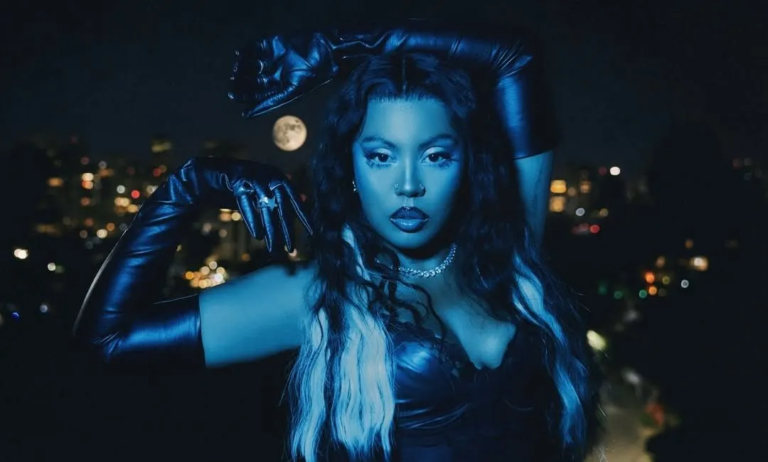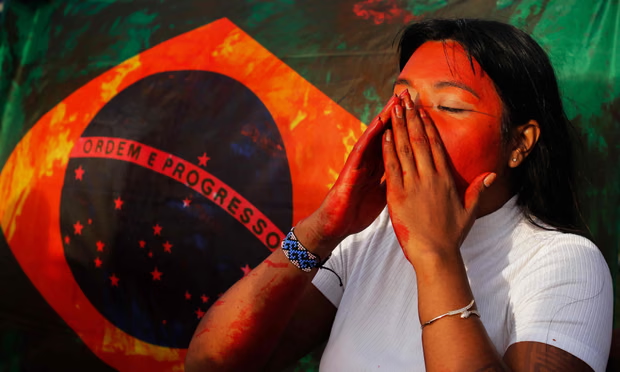
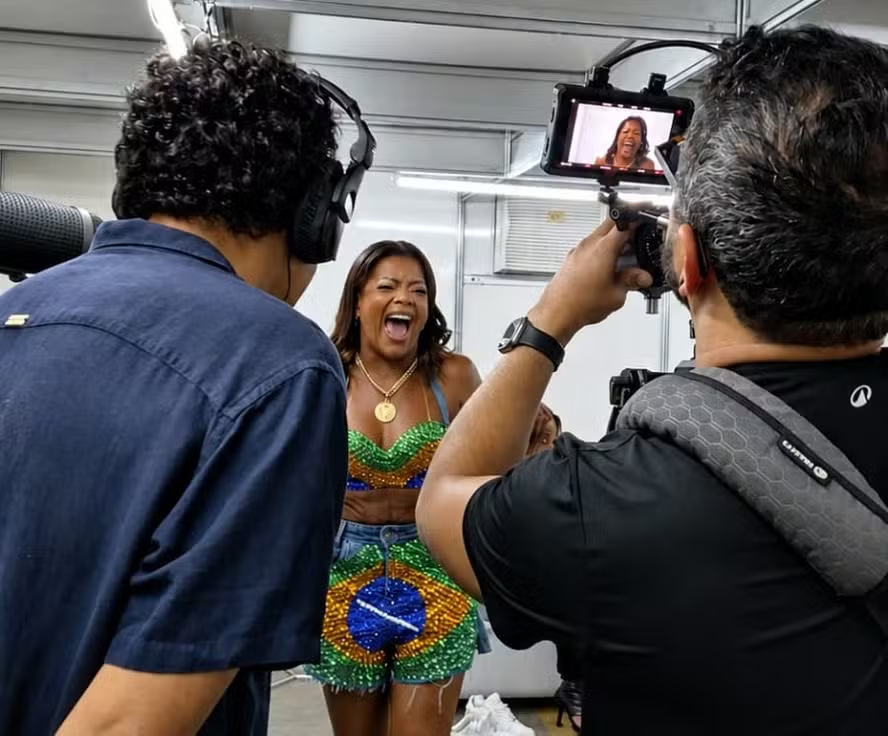
Brazil’s music and culture scene is preparing to revisit one of its most influential voices. A new documentary focusing on Tati Quebra Barraco has officially been announced, promising an in-depth look at her life, career, and lasting impact on funk carioca and Brazilian urban music.
The project is expected to explore not only her rise as an artist but also her role in shaping a genre that has become central to Brazil’s cultural identity. For many, this documentary represents a long-overdue recognition of a figure who helped define the sound and attitude of modern Brazilian funk.
A Pioneer of Funk Carioca Culture.
Tati Quebra Barraco is widely recognized as one of the foundational voices in funk carioca, a genre born in the favelas of Rio de Janeiro that blends electronic beats, hip-hop influences, and local rhythmic traditions.
Her emergence came at a time when female voices were rarely given space in the genre. Through bold lyrics, unapologetic expression, and a commanding stage presence, she challenged both musical and social norms.
Her music often addressed themes such as:
- street life and survival
- female empowerment
- sexuality and independence
- social inequality
This direct and fearless style helped redefine what female representation in Brazilian urban music could look like.
The Documentary’s Cultural Importance
The upcoming documentary is expected to go beyond music, focusing on the cultural and historical context that shaped her career. It will likely explore:
- the evolution of funk carioca in Rio de Janeiro
- the challenges faced by women in the genre
- censorship and controversy surrounding early funk music
- the rise of funk as a mainstream cultural force in Brazil
By centering Tati Quebra Barraco, the project highlights how individual artists can influence entire cultural movements.
For many fans and cultural analysts, this documentary is not just about one artist—it is about documenting a movement that grew from marginalized communities into a global cultural export.
Funk Carioca and Its Connection to Brazilian Hip-Hop
Funk carioca and Brazilian hip-hop have always shared overlapping spaces. Both genres emerged from urban communities and became platforms for storytelling, resistance, and identity.
Funk’s rhythmic intensity and raw lyrical delivery influenced the evolution of Brazilian rap, while hip-hop brought new production styles, lyrical structures, and global connections.
Artists like Tati Quebra Barraco played a key role in bridging this gap. Her work helped normalize the idea that funk could be both mainstream and culturally powerful, paving the way for later collaborations between funk and rap artists.
Today, Brazilian hip-hop often blends:
- trap production
- funk carioca percussion
- drill influences
- regional lyrical styles
This hybrid sound would not be possible without early pioneers who pushed funk into the spotlight.
Breaking Barriers for Women in Funk
One of the most important aspects of Tati Quebra Barraco’s legacy is her role in breaking gender barriers.
At a time when the funk scene was heavily male-dominated, she stood out for her confidence, lyrical boldness, and refusal to conform to traditional expectations of female artists.
Her presence helped open doors for a new generation of women in Brazilian urban music, influencing both funk and rap scenes. Today’s rise of female artists in Brazilian hip-hop can be traced back to early pioneers who refused to be sidelined.
This makes the upcoming documentary especially significant in the context of ongoing discussions about representation in music.
From Local Voice to National Symbol
Over time, Tati Quebra Barraco evolved from a local funk performer into a national cultural figure. Her music became widely recognized not just for its sound, but for its attitude—bold, direct, and unapologetically rooted in lived experience.
Her influence extends beyond music into fashion, language, and youth culture in Brazil. Many phrases and stylistic choices from early funk culture have entered everyday slang and urban identity.
The documentary is expected to highlight this transformation, showing how an artist from the margins became a symbol of cultural pride.
Why This Documentary Matters Now
The timing of the documentary reflects a broader trend in Brazilian media: a renewed interest in documenting the origins of funk and hip-hop culture.
As Brazilian music continues to gain international attention, there is growing recognition of the pioneers who built the foundation for today’s global success.
For younger audiences, this project offers an opportunity to understand:
- where funk carioca came from
- how it evolved over time
- the role of women in shaping its identity
- and how it connects to modern Brazilian hip-hop
For older fans, it serves as a cultural archive of a movement that defined generations.
A Legacy That Continues to Shape Music
The influence of Tati Quebra Barraco is still visible in today’s music landscape. Modern funk and rap artists continue to draw inspiration from her style, attitude, and lyrical approach.
Her impact can be heard in:
- contemporary funk beats
- female-led rap and funk collaborations
- socially conscious urban music
- hybrid trap-funk productions
As Brazilian music continues to evolve, her legacy remains a reference point for authenticity and cultural resistance.
Conclusion: A Story Long Overdue
The announcement of a documentary on Tati Quebra Barraco marks an important moment for Brazilian music history. It recognizes not just an artist, but a pioneer whose work helped shape an entire cultural movement.
By revisiting her journey, the project ensures that the story of funk carioca is preserved with the depth and respect it deserves.
More than anything, it reinforces a simple truth: Brazilian hip-hop and funk culture are built on voices that refused to stay silent—and Tati Quebra Barraco remains one of its most powerful examples.
About the Author