By Eli Jesse
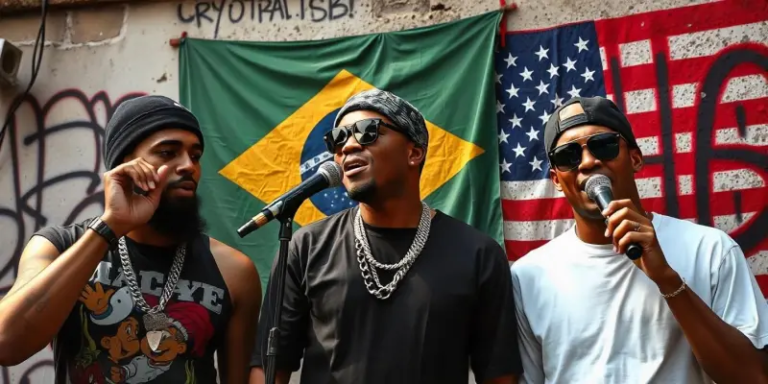
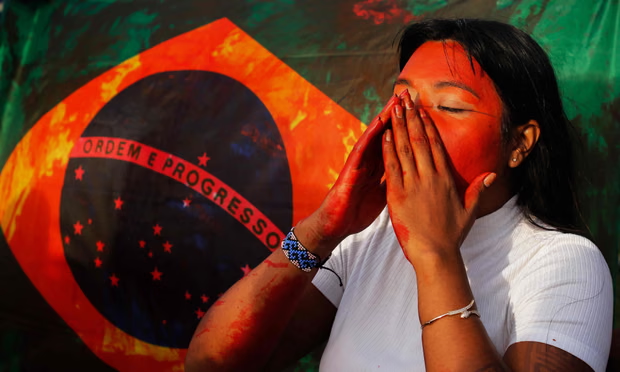
Brazilian hip-hop reached a historic milestone this month after the country’s Chamber of Deputies approved legislation that officially recognizes hip-hop as a cultural movement. The bill marks one of the most significant political acknowledgments of Brazil’s urban culture, reflecting decades of artistic, social, and community contributions made by hip-hop artists across the country.
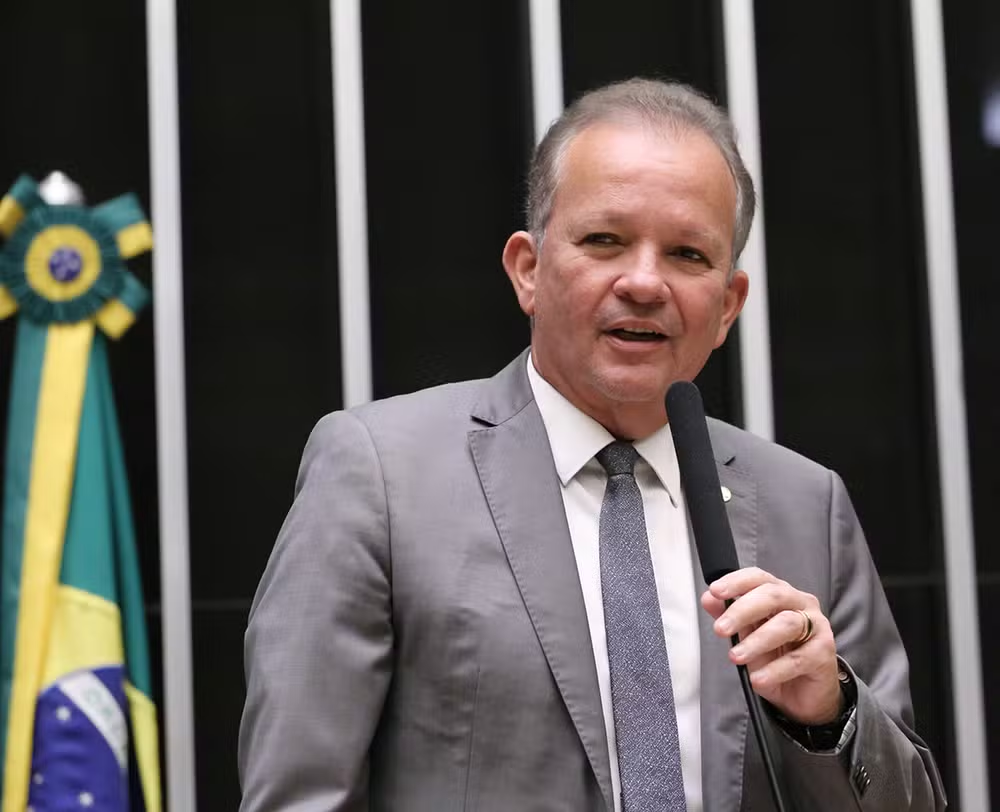
Although the proposal must still complete the remaining legislative process before becoming law, its approval by the Chamber of Deputies has been widely welcomed by artists, cultural organizations, and members of Brazil’s hip-hop community.
For many supporters, the measure represents more than symbolic recognition—it is an acknowledgment of hip-hop’s lasting impact on Brazilian society.
A Historic Step for Brazilian Hip-Hop
Hip-hop has played an important role in Brazil since the 1980s, growing from an underground movement into one of the country’s most influential cultural forces.
Built on the foundations of rap, DJing, breakdancing, graffiti, and community activism, Brazilian hip-hop has given generations of young people a platform to express their realities, challenge inequality, and celebrate their identities.
The Chamber’s approval recognizes that hip-hop is not simply a music genre but a cultural movement with deep social significance.
If the legislation completes the remaining stages of the legislative process, it would formally acknowledge the movement’s contribution to Brazilian culture and public life.
What the Bill Means
The proposed legislation seeks to recognize hip-hop as an official expression of Brazilian culture.
Supporters believe this recognition could encourage greater appreciation for the movement while strengthening opportunities for cultural projects, educational initiatives, and community programs connected to hip-hop.
The proposal also highlights the five traditional elements commonly associated with hip-hop culture:
- MCs (Rap)
- DJs
- Breakdancing
- Graffiti
- Knowledge and community education
By recognizing these elements together, lawmakers acknowledge that hip-hop extends beyond music into art, education, and social development.
Recognition After Decades of Growth
Brazil is home to one of the world’s largest hip-hop communities.
From São Paulo and Rio de Janeiro to Belo Horizonte, Salvador, Recife, Porto Alegre, and Brasília, rap has become an essential part of the country’s cultural landscape.
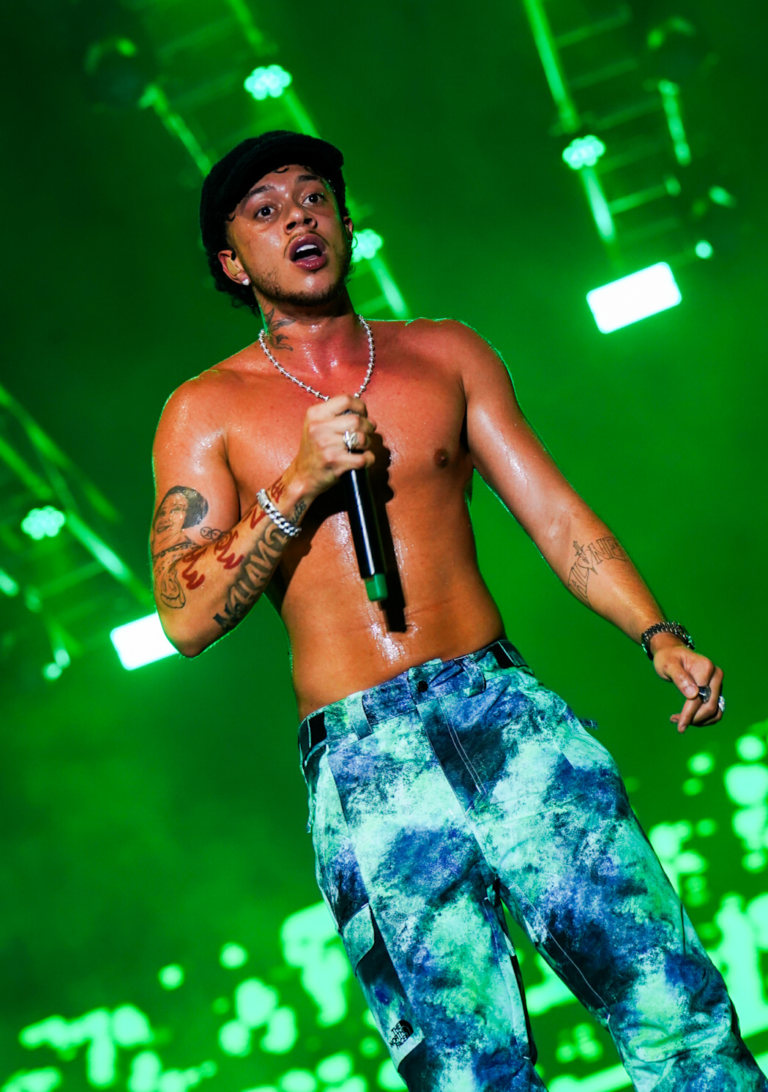
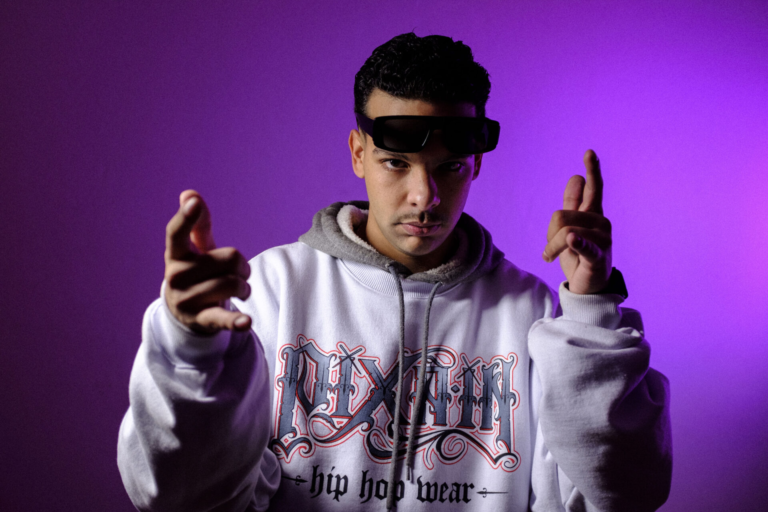
Artists including Emicida, Racionais MC’s, Djonga, BK’, Baco Exu do Blues, Criolo, and many others have helped elevate Brazilian hip-hop to international audiences while using their music to address issues such as racial inequality, education, public safety, economic opportunity, and social justice.
The Chamber’s decision reflects the growing recognition that these artistic contributions deserve national acknowledgment.
More Than Music
Throughout its history, hip-hop has served as an important educational and community-building tool in Brazil.
Community organizations have long used rap workshops, graffiti projects, DJ classes, and breakdance programs to engage young people and promote artistic development.
Many supporters of the legislation argue that recognizing hip-hop as a cultural movement validates decades of grassroots work carried out in neighborhoods across the country.
The movement has consistently provided opportunities for creativity, entrepreneurship, and social inclusion.
A Positive Signal for Future Cultural Policies
Although the legislation does not automatically create funding programs or financial incentives, many observers believe official recognition could strengthen future public policies supporting hip-hop culture.
Recognition by the federal government may encourage additional partnerships involving:
- Cultural festivals
- Educational workshops
- Youth development programs
- Museum exhibitions
- Community art initiatives
- Preservation of hip-hop history
Artists and cultural advocates have long argued that hip-hop deserves the same institutional respect afforded to other important cultural expressions in Brazil.
Growing Mainstream Recognition
The approval comes during a period of remarkable growth for Brazilian hip-hop.
Rap artists continue dominating streaming platforms, performing at major festivals, receiving national award nominations, and collaborating with international musicians.
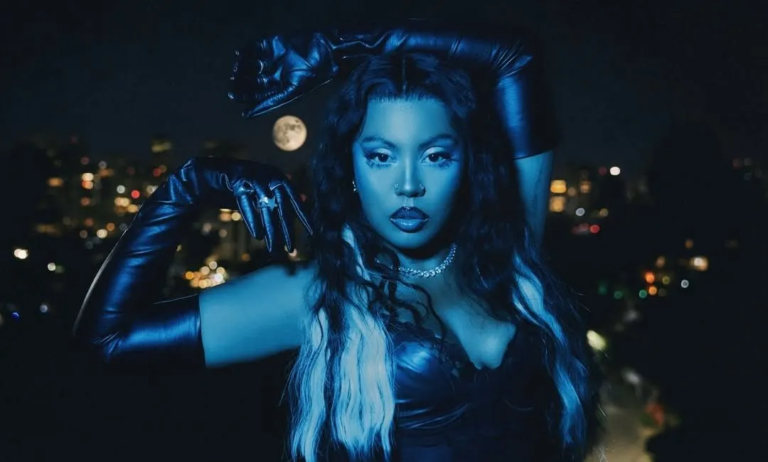
At the same time, female rappers, independent artists, and regional scenes are expanding the diversity of Brazilian hip-hop, bringing new voices and creative perspectives to the culture.
The Chamber’s decision reflects this broader transformation, recognizing that hip-hop has become an essential part of Brazil’s modern cultural identity.
Looking Ahead
The legislation will continue through the remaining stages required before becoming law, but its approval by the Chamber of Deputies already represents a landmark moment for Brazilian hip-hop.
For artists, DJs, dancers, graffiti writers, producers, and community leaders who have spent decades building the culture, the vote serves as recognition of the movement’s lasting contribution to Brazilian society.
As Brazilian hip-hop continues gaining international attention, this historic step demonstrates that the culture’s influence extends well beyond music.
From community centers and classrooms to festival stages and government institutions, hip-hop continues shaping Brazil’s cultural future—one generation at a time.
Slug: brazil-congress-approves-bill-recognizing-hip-hop-as-cultural-movement
Meta Description: Brazil’s Chamber of Deputies has approved landmark legislation recognizing hip-hop as a cultural movement, marking a historic moment for the country’s rap community and urban culture.
Tags: Brazilian Hip-Hop, Brazil Congress, Hip-Hop Culture, Rap News, Brazilian Rap, Emicida, Racionais MC’s, Graffiti, Breakdancing, Urban Culture, Latin Hip-Hop
About the Author