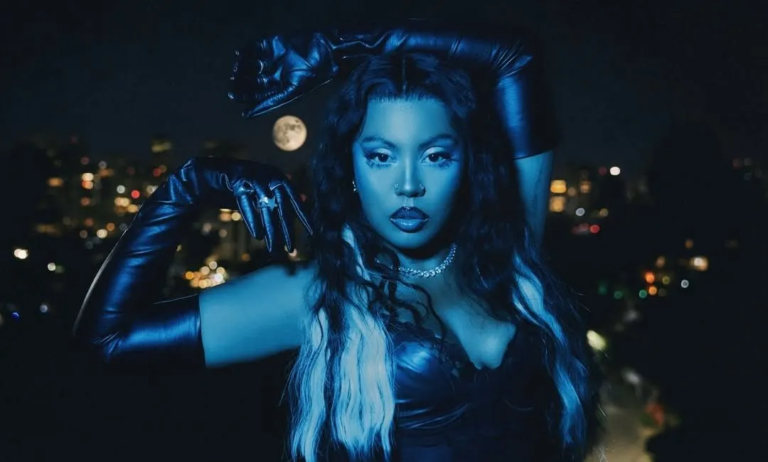
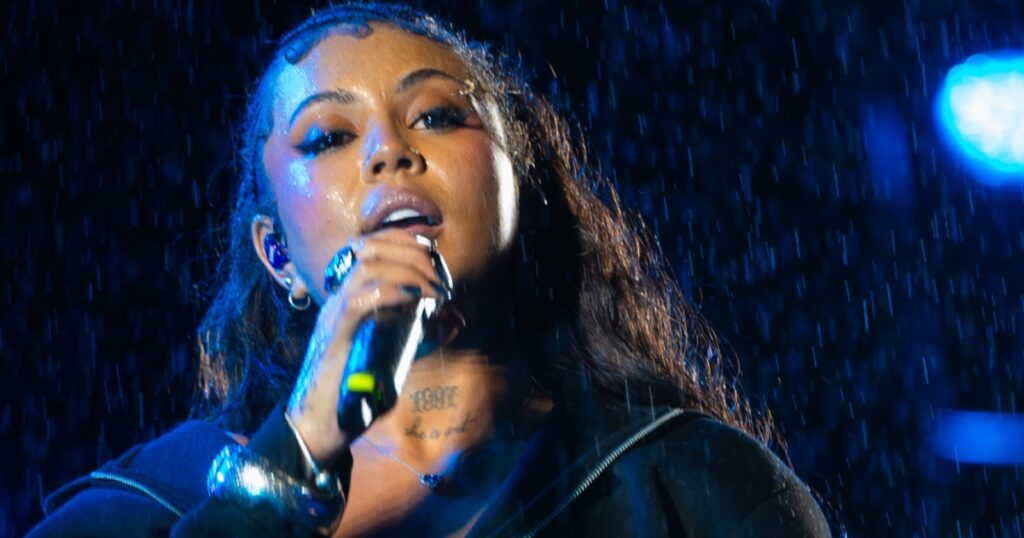
Brazilian rapper and singer Budah has officially entered a new chapter in her career.
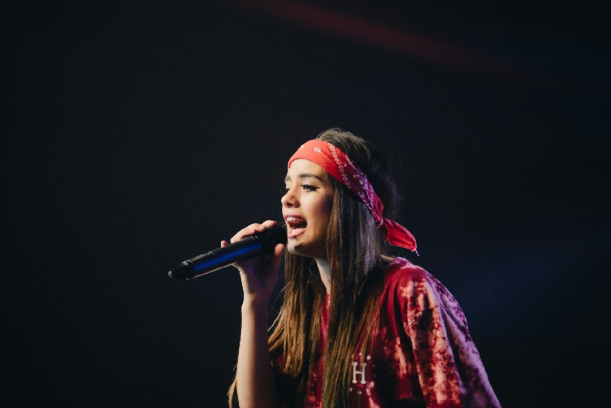
The artist launched the live era surrounding her second studio album, FREQUÊNCIA LUNAR, with a performance at Cine Joia in São Paulo on August 22. The show marked the beginning of a new run of performances built around the sound, atmosphere and themes of the album.
Released in May, FREQUÊNCIA LUNAR represents a significant shift from Budah’s earlier work. The 14-track project moves beyond the R&B foundations of her previous album Púrpura, incorporating rap, boom bap, drill, ragga, house and contemporary pop influences.
The album includes collaborations with some of the most recognizable names in Brazil’s current urban music scene, including IZA, Pabllo Vittar, Duquesa, Tasha & Tracie, AJULIACOSTA and Vita. Songs such as “VAMPIRA,” “SALTO 15,” “VIDA DE ARTISTA” and “VIP (ninguém te conhece)” showcase the project’s wide musical range.
A Different Side of Budah
For Budah, FREQUÊNCIA LUNAR was deliberately designed to sound different from Púrpura.
The Espírito Santo-born artist told Billboard Brasil that she wanted to move away from the R&B sound she considered her comfort zone and create music that felt more energetic and suited to the night. The album was eventually structured around the idea of moving from sunset into the early hours of the morning.
That concept also shapes the live show.
The São Paulo performance combines new material from FREQUÊNCIA LUNAR with songs from the Púrpura era, allowing Budah to present both sides of her artistic development. Special appearances from Vita and Franco The Sir!, who also appear on the album, were part of the opening show.
The new era will also take Budah to one of Brazil’s biggest music festivals. She is scheduled to perform on the Espaço Favela stage at Rock in Rio on September 6, giving the project another major platform.
Women Are Taking More Space in Brazilian Rap
Budah’s new era arrives at an important moment for women in Brazilian hip-hop.
In an August interview with Billboard Brasil, the artist spoke about the increasing number of Black women appearing on major festival stages. She pointed to the growing demand for artists such as herself, Duquesa, MC Luanna and Lourena, arguing that women in rap should not simply be treated as opening acts.
Her point is straightforward: there is an audience for them.
Budah has also used her own performances to create space for other women in the scene. At Movimento Cidade 2026, she brought together MC Luanna, Lourena and Duquesa for a collaborative performance, describing the meeting as a celebration of what is happening with Black women in Brazilian rap.
That movement is reflected in FREQUÊNCIA LUNAR itself.
The album’s collaborations with Duquesa and Tasha & Tracie place Budah alongside two other important voices from Brazil’s new generation, while songs such as “MEU CRIME É EXISTIR” and “VIDA DE ARTISTA” explore themes surrounding identity, achievement, independence and the experience of women in the music industry.
From Espírito Santo to São Paulo
Budah’s story also reflects the movement of Brazilian artists from regional scenes toward the country’s largest music industry.
Born in Espírito Santo and raised in Cariacica, Budah developed through the hip-hop culture of the Greater Vitória area before moving to São Paulo to expand her career.
She has described São Paulo as a place where opportunities happen at a different scale, particularly for artists working in rap and urban music. At the same time, she has maintained her connection to Espírito Santo, returning to perform and participate in events such as Movimento Cidade.
That connection between regional identity and São Paulo’s larger music ecosystem has become an increasingly important part of her story.
FREQUÊNCIA LUNAR Is More Than an Album
What makes Budah’s current moment interesting is that FREQUÊNCIA LUNAR is functioning as more than a collection of songs.
It is becoming an entire artistic identity built around nightlife, movement, confidence and self-expression.
The project also demonstrates how Brazilian rap continues to blur boundaries between genres. Budah moves between rap, R&B, drill, boom bap, house and pop without abandoning the hip-hop foundation that shaped her.
With the tour now underway and a Rock in Rio appearance ahead, FREQUÊNCIA LUNAR gives Budah an opportunity to take that sound to audiences well beyond the underground scene.
At the same time, her comments about women in Brazilian rap point to a larger shift taking place around her.
Artists such as Budah, Duquesa, Tasha & Tracie and others are not simply asking for more space within Brazilian hip-hop. They are increasingly occupying the stages, building audiences and creating their own moments.
And as Budah’s FREQUÊNCIA LUNAR era continues, her rise is becoming part of that bigger story.
About the Author