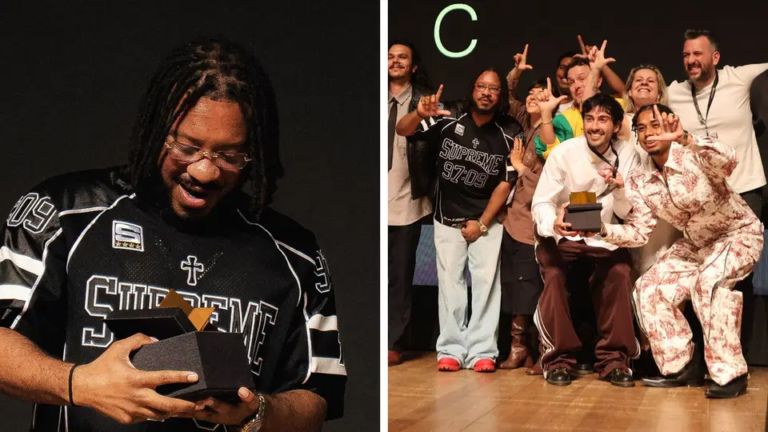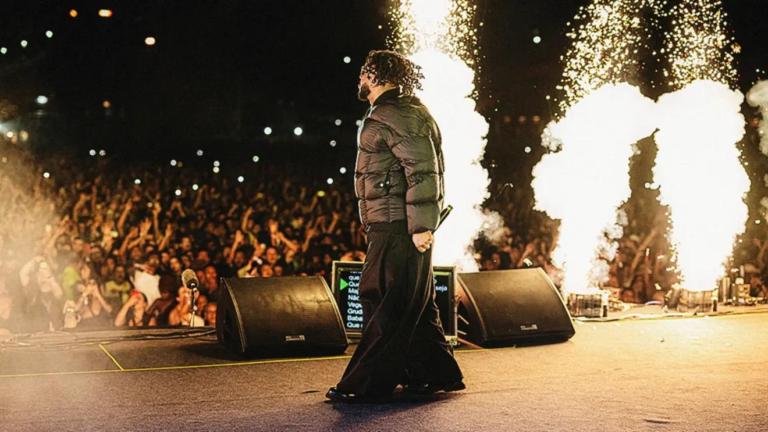

São Paulo producer Mu540 linked up with Indian artist BamBoy for a rare Brazil–India B2B set at Bar Alto in Vila Madalena, creating one of the more adventurous club-music crossovers to emerge from Brazil at the start of September.
The performance brought together São Paulo funk, heavy bass, South Asian rhythmic ideas and exclusive dubplates, with the two artists using the back-to-back format to explore similarities between Brazilian and Indian club music rather than simply alternating between separate styles.
For Mu540, the collaboration reflects a broader interest in pushing Brazilian funk into international conversations without stripping away its local identity.
The São Paulo producer has increasingly become known for treating funk as a flexible foundation rather than a fixed formula, combining its rhythmic language with electronic music, club structures and experimental production.
BamBoy brought a different set of references into the room, and the result became a conversation between two scenes that are geographically distant but rhythmically closer than they may first appear.
Brazil Meets India on the Dancefloor
The B2B took place at Bar Alto in Vila Madalena, one of São Paulo’s best-known nightlife districts.
According to Rap Dab, the set was built around heavy low end, experimentation and unreleased material, with Mu540 and BamBoy intentionally looking for the points where their musical backgrounds could meet.
Rather than presenting Brazilian and Indian sounds as opposites, the performance emphasized shared rhythmic characteristics.
Mu540 explained that the connection between the two artists became obvious once they began exchanging beats and working together. He described the goal as showing listeners how much common ground exists between the music of India and Brazil.
That idea gave the set a deeper purpose than a simple international guest appearance.
The two artists were trying to make their music feel like one continuous language.
Mu540 Continues to Push São Paulo Funk Outward
Mu540 has spent the past few years becoming one of the more experimental figures connected to Brazil’s club scene.
His sound often combines funk paulista with four-to-the-floor club rhythms, electronic textures and sound-design experimentation. NTS described his 2024 RUSH set as a blend of four-on-the-floor rhythms with São Paulo baile funk, while Beatportal later highlighted his genre-bending approach and growing international profile.
That wider perspective makes a collaboration with an Indian artist feel consistent with the direction of his work.
Instead of treating Brazilian funk only as a domestic style, Mu540 has increasingly presented it as a form that can interact with club music from other parts of the world.
The BamBoy collaboration is a clear example of that approach.
Rhythm Becomes the Common Language
What makes the Brazil–India connection interesting is that both countries have highly rhythmic popular and underground music cultures.
Brazilian funk is built around repetition, percussion, bass and dance-floor movement.
South Asian club music can draw from similarly dense rhythmic traditions, especially when producers begin combining regional percussion with electronic bass music.
Mu540 and BamBoy’s set focused on those similarities.
The artists did not attempt to erase the differences between their scenes. Instead, they used those differences as raw material for new combinations.
Rap Dab described the performance as one where both artists’ musical research interacted directly, creating new possibilities for the dancefloor rather than presenting two disconnected playlists.
Exclusive Dubplates Keep the Set Unpredictable
Another key element of the performance was the use of exclusive dubplates.
In club culture, dubplates allow DJs to play unreleased edits, alternate versions and tracks made specifically for certain sets.
That approach gave Mu540 and BamBoy more freedom to build something unique for the São Paulo audience.
Instead of relying only on commercially released songs, they could reshape tracks around the flow of the performance and create transitions that listeners would not necessarily hear anywhere else.
For a collaboration built on experimentation, that flexibility was important.
It allowed the artists to test how Brazilian funk patterns could interact with South Asian rhythmic ideas in real time.
An International Future for Brazilian Funk
The set also fits into a larger transformation happening around Brazilian funk.
The genre has increasingly moved into international clubs, festivals and electronic-music circles, with producers outside Brazil borrowing its rhythms and Brazilian artists collaborating across borders.
Mu540 has been part of that movement.
His international appearances and genre-crossing sets have helped position him as an artist who can move between baile funk and broader global club culture without treating either as a novelty.
The collaboration with BamBoy pushes that idea toward a less obvious destination.
Connections between Brazil and the United States or Europe are relatively common in electronic music.
Brazil and India is a less familiar pairing.
That is exactly why the set stands out.
A Different Kind of Cross-Cultural Collaboration
International music collaborations are often built around a featured verse or a high-profile single.
Mu540 and BamBoy took a different route.
Their collaboration happened inside the DJ booth.
That meant the creative exchange was based less on celebrity and more on sound — beat selection, transitions, unreleased tracks and the way rhythms interact in a live room.
It also gave the audience the chance to hear the connection immediately.
If the experiment worked, people could feel it on the dancefloor before they ever needed to understand the theory behind it.
That is one of the strengths of club music.
Cultural exchange can happen through rhythm first.
São Paulo Remains a Hub for Experimentation
The Bar Alto performance also reinforces São Paulo’s role as a meeting point for international underground music.
The city’s club scene has long provided space for funk, electronic music, rap and experimental sounds to overlap.
Mu540 himself continued performing across São Paulo later in September, including appearances connected to Weird Baile and other underground events.
That environment makes collaborations like the BamBoy B2B possible.
Artists can arrive with very different musical histories and still find an audience willing to follow them into unfamiliar territory.
Brazil and India Find Common Ground
Mu540 and BamBoy’s set may not have had the scale of a stadium rap concert or a major festival headline slot.
But culturally, it represents something important.
It shows Brazilian club music continuing to look outward while remaining rooted in local rhythm.
It also demonstrates that the next interesting international connection does not always have to involve the United States or Europe.
Sometimes the most exciting idea comes from putting two scenes together that rarely meet.
In this case, São Paulo funk and South Asian club music found enough common ground to sound less like two separate worlds and more like parts of the same conversation.
And for Mu540, that is exactly the point.
About the Author