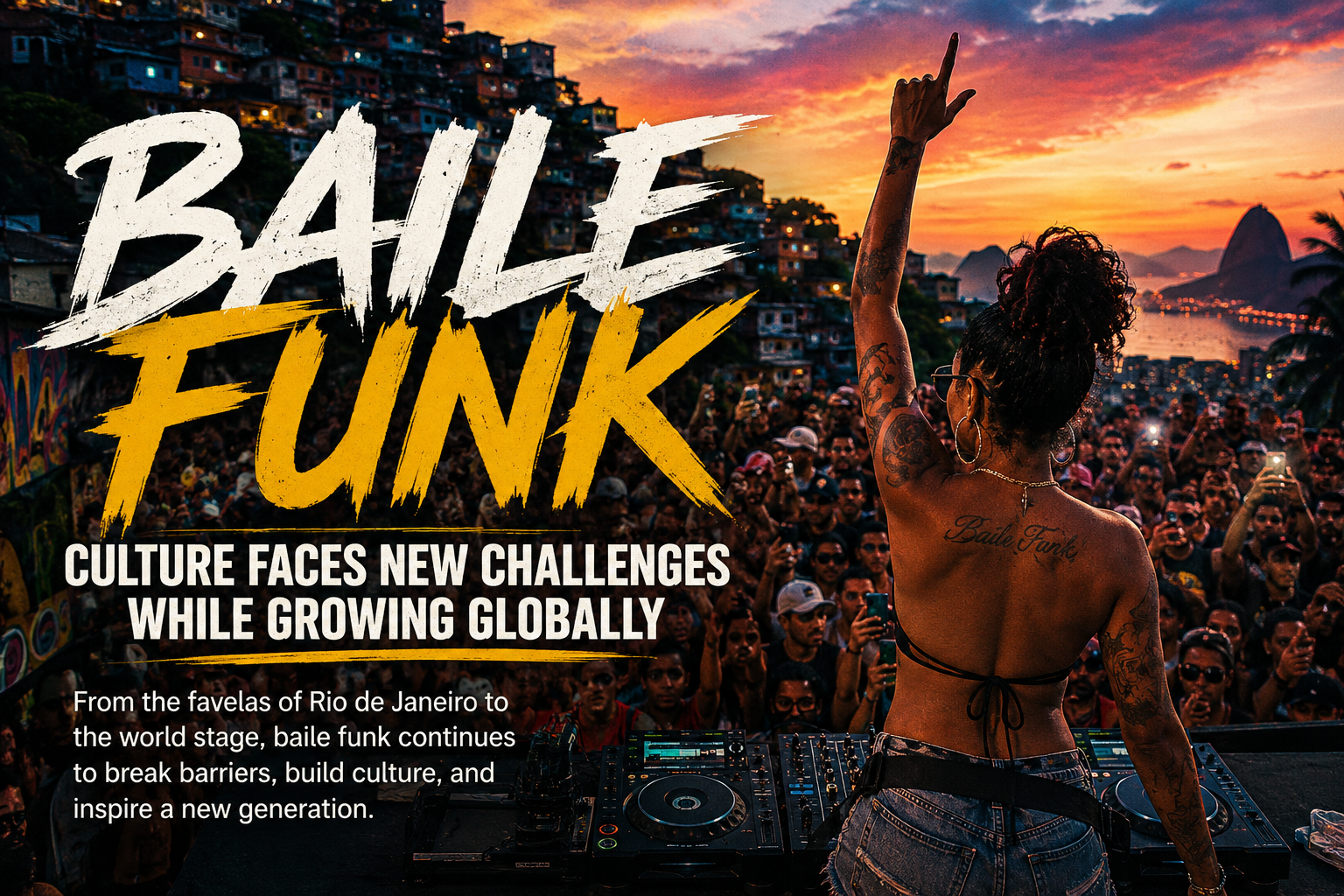
Baile funk has long been one of Brazil’s most powerful cultural movements. Born in the favelas of Rio de Janeiro, the genre has evolved from a local underground sound into a global phenomenon that influences music, dance, fashion, and youth culture across continents.
In 2026, baile funk continues to dominate clubs, social media feeds, streaming platforms, and festival stages. Yet despite its growing international popularity, the culture remains under pressure at home as debates over regulation, public events, and community spaces continue throughout Brazil.
The story of baile funk today is one of both expansion and resistance—a genre reaching new heights globally while fighting to preserve its roots locally.
From Favela Soundtrack to Global Movement
Baile funk emerged from Rio de Janeiro’s communities during the 1980s and 1990s, developing its own identity through powerful bass, energetic rhythms, and street-centered storytelling.
For decades, the genre served as a voice for young people living in marginalized communities. It provided an outlet for expression, celebration, and creativity while reflecting the realities of everyday life in Brazil’s urban neighborhoods.
What began as a local movement has since transformed into one of Brazil’s most recognizable musical exports.
Today, baile funk influences artists, producers, and DJs around the world, with its rhythms appearing in international pop records,
hip-hop productions, and electronic music sets.
Streaming Platforms Are Fueling Global Growth
The rise of digital platforms has played a major role in baile funk’s international expansion.
Unlike previous generations of Brazilian music, modern baile funk artists can reach listeners across the globe instantly through streaming services and social media platforms.
Songs that once circulated primarily through local parties now attract millions of streams from audiences in North America, Europe, Africa, and Asia.
Short-form video platforms have been especially important. Dance challenges, remix culture, and viral clips have introduced baile funk to entirely new audiences who may have never previously explored Brazilian music.
As a result, the genre is experiencing unprecedented global exposure.
International Festivals Are Embracing Baile Funk
The growing popularity of Brazilian music has led to increased demand for baile funk performances at international festivals.
Promoters are recognizing that audiences want authentic sounds from emerging global music scenes, and baile funk has become one of the most exciting genres to watch.
Artists connected to the movement are increasingly appearing at:
- International music festivals
- Electronic music events
- Hip-hop showcases
- Cultural exchange programs
- Global dance competitions
This exposure is helping elevate Brazilian artists while introducing global audiences to the culture that created the music.
Challenges Continue Within Brazil
Despite international success, baile funk continues to face obstacles within Brazil.
Public debates surrounding community parties, noise regulations, and public safety concerns have led to increased scrutiny in some regions. Certain events have faced restrictions, while organizers often navigate complex local regulations.
Supporters of the culture argue that baile funk is frequently misunderstood and unfairly targeted because of its roots in favela communities.
Many artists, activists, and cultural leaders believe the genre deserves recognition as an important part of Brazil’s cultural heritage rather than being viewed solely through the lens of controversy.
These conversations remain central to the future of the movement.
Social Media Keeps The Culture Alive
One reason baile funk continues growing despite challenges is its strong connection to social media.
The culture thrives online through:
- Dance trends
- Music previews
- Viral performances
- Fashion content
- Community-driven storytelling
Young creators continue introducing new audiences to baile funk every day, helping maintain momentum even when physical events face restrictions.
The internet has effectively become a new stage for the movement.
Baile Funk’s Influence on Hip-Hop and Pop Music
The impact of baile funk now extends far beyond its own genre.
Modern hip-hop producers frequently borrow its percussion patterns and energetic rhythms. Pop artists increasingly experiment with funk-inspired beats, while electronic music producers continue incorporating elements of the sound into club records.
This crossover appeal has helped position baile funk as one of the most influential musical movements to emerge from Brazil in recent decades.
Its influence can be heard across:
- Hip-hop
- Trap
- Electronic music
- Pop
- Dance music
The genre’s reach continues to expand every year.
The Future of Baile Funk
As global audiences continue discovering Brazilian music, baile funk appears positioned for even greater growth.
The challenge moving forward will be balancing international success with cultural authenticity. Many artists hope to preserve the community-driven spirit that built the genre while embracing new opportunities on the world stage.
For millions of young Brazilians, baile funk remains more than music. It represents identity, creativity, resilience, and cultural pride.
While debates surrounding the genre are unlikely to disappear, its influence on global music culture has never been stronger.
What began in Rio de Janeiro’s favelas has become a worldwide movement, and the next chapter of baile funk’s story is only beginning.
About the Author